The Huynh Electronic Parameters
A set of modern, unified tools for ranking ligand donor strength by ¹³C NMR spectroscopy.
What are the HEPs?
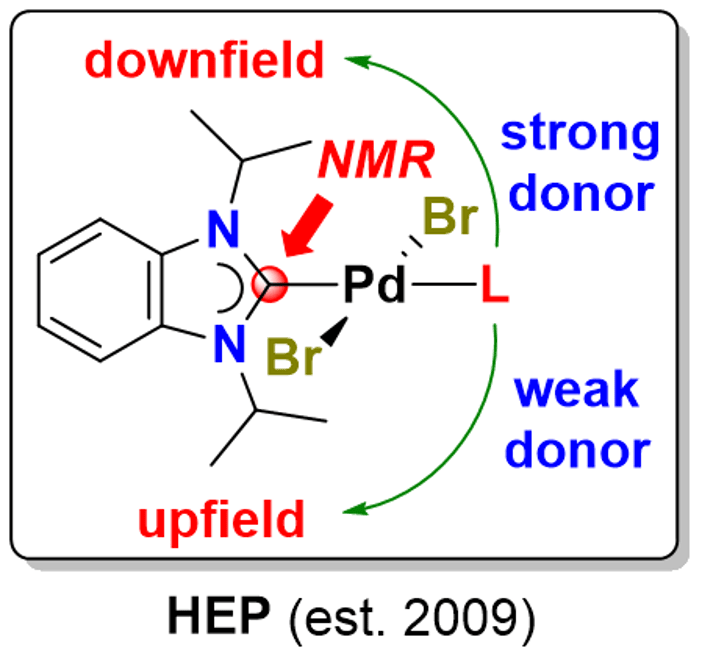
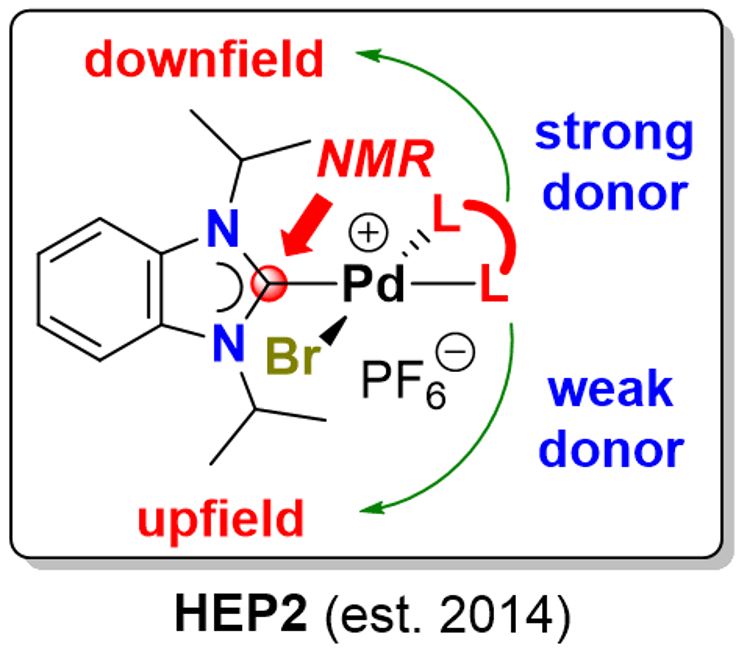
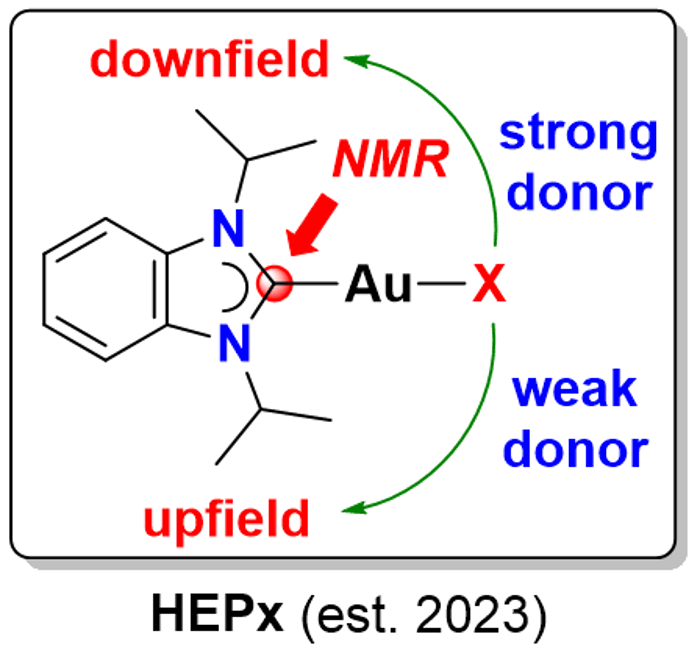
The Huynh Electronic Parameter (HEP) was first introduced in 2009. It evaluates the electronic influence of a trans-ligand L on the ¹³C carbene NMR signal of the 1,3-diisopropylbenzimidazolin-2-ylidene (iPr₂-bimy) reporter in complexes of general formula trans-[PdBr₂(iPr₂-bimy)L]. A stronger donor induces a downfield shift; a weaker donor induces an upfield shift. Since backdonation from palladium(II) is insignificant, HEP primarily measures σ-donor strength. Another unique feature of the HEP is that comparison can be made between classical Werner-type ligands (e.g. N, O, S, halides) and organometallic ligands (e.g. carbenes, phosphines, etc) on a unified scale. The HEP has also been extended to the more challenging evaluation of bidentate and anionic X-type ligands, and these are termed HEP2 and HEPx, respectively.
Currently, hundreds of ligands have been evaluated by HEP, HEP2 and HEPx and their data are reported in literature. It is our hope that the HEPs can be used as a toolbox to help chemists understand and explain reactivity trends, which are often ligand-based. Research in our laboratory is on-going to further explore the scopes and limitations of our electronic parameters.
Why do stronger donors cause a downfield shift?
“Strong donors increase the electron density of a complex and this shielding effect will lead to a highfield shift.” This is a common misconception caused by oversimplified NMR teaching in many organic chemistry courses. In reality, chemical shifts are governed by diamagnetic (σd), paramagnetic (σp), and neighbouring group anisotropy (σn) terms. Unfortunately, many lecturers only focus on simple 1H NMR spectroscopy, where the paramagnetic term (σp) plays a minor role. In any other nuclei, it can even become the main contributor to the chemical shift. Knowledge of σp is thus essential for a deep understanding of HEP. However, a detailed description of these is beyond the scope of this small paragraph, and proper literature material should be referred to instead. Here, only some brief statements and known facts are mentioned that can help one understand the trends observed in our 13C NMR based electronic parameters. These are also illustrated in Figure 1 for a better understanding.
- Free NHCs have very downfield carbene NMR resonances of >200 ppm.
- Upon metal-coordination, the carbene NMR signal shifts significantly upfield.
- A stronger trans-ligand L in our complex probes weakens the Pd–CNHC bond more than a weaker donor, i.e. trans influence.
- The weakening of the Pd–CNHC is generally accompanied by a bond elongation, i.e. trans influence.
- Stronger trans-ligands will thus increase the “free-carbene” character of the iPr₂-bimy reporter ligand, which results in a downfield shift of its 13Ccarbene NMR signal.
- In a fictive, extreme case, a super-strongly donating ligand would lead to dissociation of the iPr₂-bimy reporter ligand, which chemical shift would be >200 ppm.
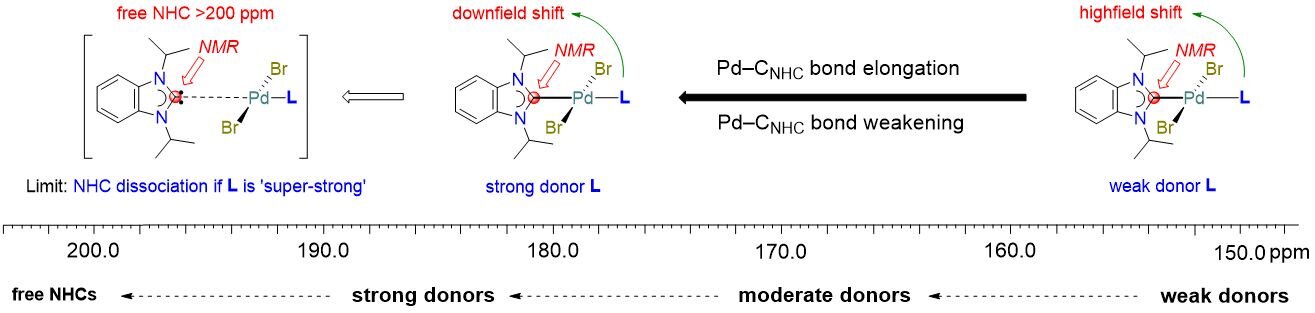
Figure 1. The principle of the Huynh Electronic Parameter (HEP).